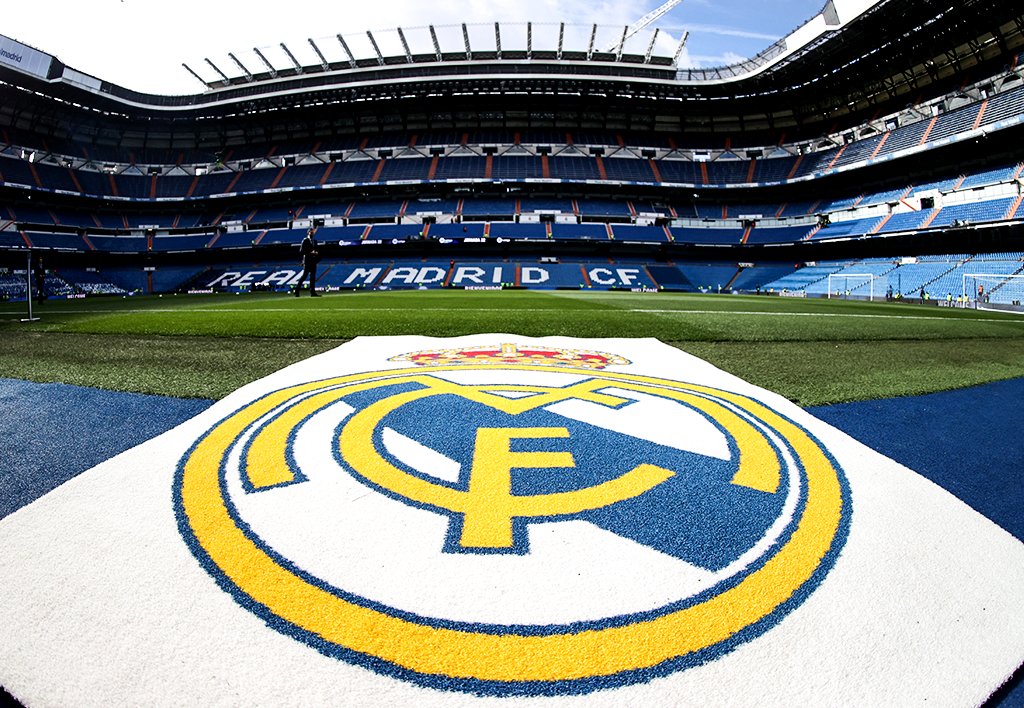
Real Madrid have officially rebranded their historic home ground, changing its name from the Estadio Santiago Bernabéu to simply “Bernabéu.”
The landmark announcement was made on November 12, 2025, as the club unveiled a sleek new logo and corporate identity as part of a global modernization effort. This move reflects Real Madrid’s commitment to strengthening its international appeal and adapting its image to the demands of a new digital and commercial era.
The name adjustment represents a significant transformation in the club’s visual and cultural identity. For more than 70 years, the stadium proudly bore the name of Santiago Bernabéu de Yeste, one of the most iconic presidents in the club’s history—a man widely credited for shaping Real Madrid into the global powerhouse it is today.
According to reports from Football España and Mundo Deportivo, the streamlined “Bernabéu” branding forms a key part of Real Madrid’s long-term marketing strategy. The objective is to make the stadium’s name instantly recognizable and easily marketable across languages and cultures, similar to the way venues like “Wembley” and “Camp Nou” resonate globally.
Despite the simplification, the club has stressed that this change does not diminish Santiago Bernabéu’s legacy. His visionary leadership, which guided Real Madrid through its golden eras, remains deeply woven into the fabric of the institution. The renaming is instead seen as a symbolic step toward merging history with modernity—preserving heritage while embracing progress.
The announcement coincides with the completion of the stadium’s massive renovation project, a multi-year transformation that has turned the venue into one of the most advanced sports arenas in the world. The refurbished Bernabéu now boasts a retractable roof, high-tech façade, 360-degree video screens, and flexible facilities designed for both sports and large-scale entertainment events.
Real Madrid’s president, Florentino Pérez, described the rebranding as the dawn of a “new era” for both the club and its iconic stadium. Beyond football, the new Bernabéu is envisioned as a global entertainment destination, capable of hosting concerts, esports tournaments, international conventions, and even the first-ever NFL game in Spain.
With this bold reimagining, the Bernabéu is set to transcend its traditional role as a football ground and establish itself as a world-class multi-purpose arena, standing shoulder to shoulder with the likes of Wembley Stadium, the Allianz Arena, and the AT&T Stadium in terms of innovation and prestige.
Ultimately, the change from Estadio Santiago Bernabéu to Bernabéu reflects Real Madrid’s forward-thinking philosophy—honoring the past while confidently stepping into the future.